Core Capability
Detect
Find every agent in your organization — before they find your data.
Overview
Enterprise AI agents proliferate through many channels — internal platform teams deploy them, individual engineers spin up experimental agents, and SaaS vendors embed AI features that act agentically on your data. Most organizations have no complete inventory of what agents exist, where they run, or what they can access.
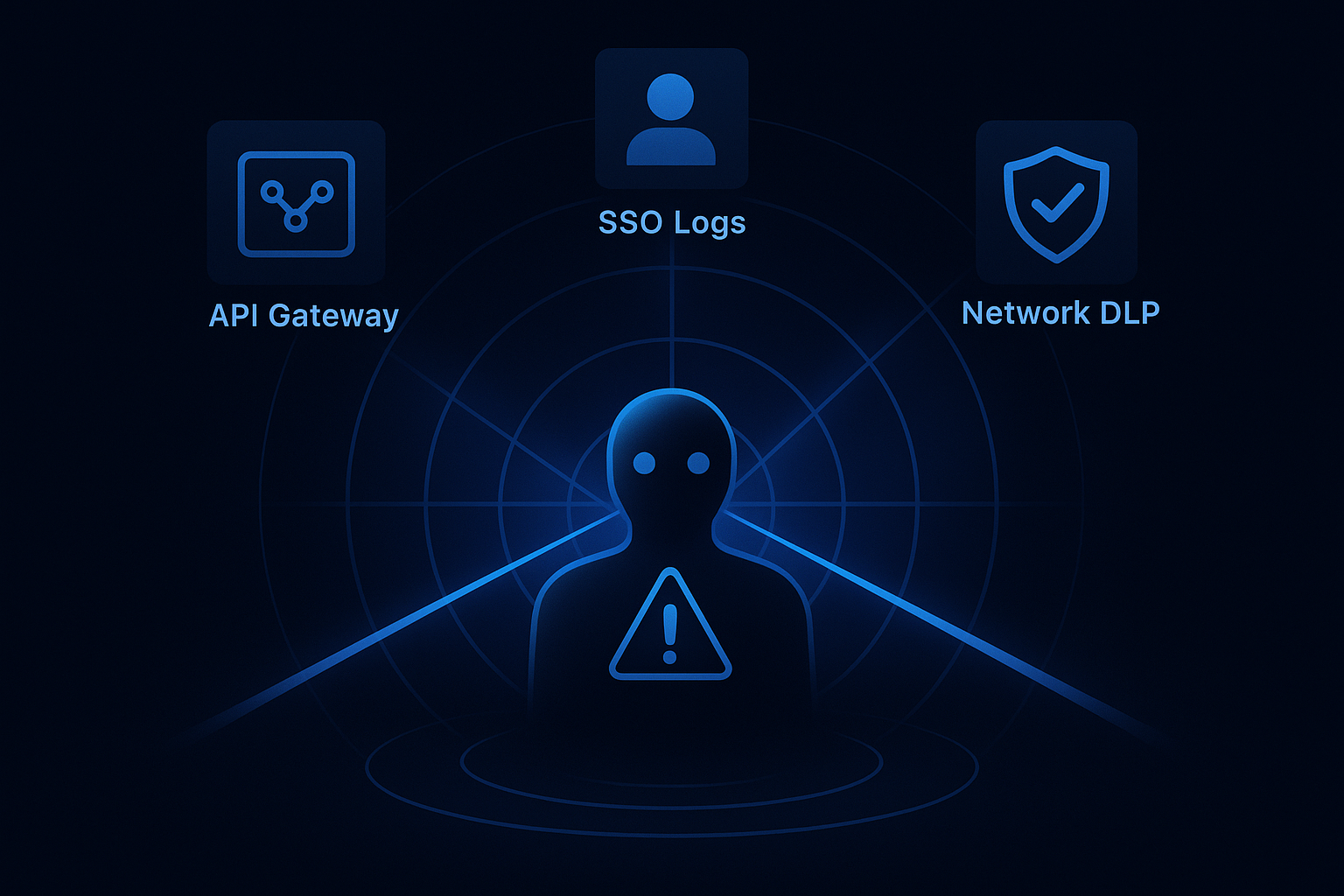
SinzAI Detect discovers agents across four primary surfaces, flags shadow agents (those without verified identity), and feeds the complete inventory into the Map and Govern stages.
Discovery Surfaces
API Gateway
Integrates with your API gateway (Kong, Apigee, AWS API Gateway) to detect agents making API calls. Identifies agent-originated traffic patterns — high-frequency, structured payloads, LLM-typical headers — and surfaces them for registration.
Network DLP
Taps into your network data loss prevention layer to identify outbound traffic from unregistered agents. Agentic traffic to LLM providers (OpenAI, Anthropic, etc.) is flagged even when it bypasses the API gateway.
SSO Logs
Analyzes identity provider logs (Okta, Azure AD, Google Workspace) for service accounts and machine identities exhibiting agent-like behavior — predictable session cadences, automated credential rotation, API-heavy access patterns.
Expense Audits
Monitors cloud and SaaS expense feeds (AWS Cost Explorer, Azure Cost Management, Ramp, Brex) for AI-related spend — LLM API keys, model inference costs, vector database provisioning — that indicates unregistered agent activity.
Shadow AI Flagging
Any agent discovered without a verified cryptographic identity is flagged as shadow AI. Shadow agents appear in the console with a prominent warning, zero trust score, and a one-click registration workflow. Until registered, shadow agents trigger alerts and are excluded from all policy enforcement — they operate in a "monitor only" mode that records their actions without granting any governed access.
⚠️ Shadow agents are the number one source of AI-related security incidents in enterprises. SinzAI customers reduce their shadow AI footprint by an average of 87% within the first 30 days.
Detection Pipeline
- 1Agent activity is detected by one or more discovery surfaces
- 2Activity is fingerprinted — traffic patterns, headers, cadence, payload structure
- 3Fingerprint is matched against the registry of known agents
- 4Unmatched fingerprints trigger a shadow agent alert with full context
- 5Security team reviews and either registers (issues identity) or blocks the agent